
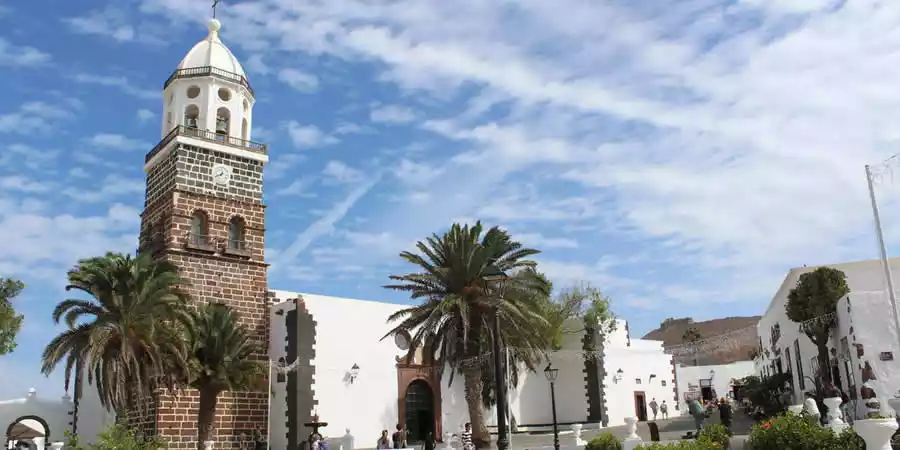
The municipality of Teguise, with an area of 263 km2 , is the largest on the island of Lanzarote. The municipality also includes the islets and rocks of the Chinijo Archipelago: La Graciosa, Alegranza, Montaña Clara, Roque del Este and Roque del Oeste or from hell.
Its capital, La Villa de Teguise, is located inside it, and was the capital of Lanzarote from the first half of the 15th century to the second half of the 19th century, of what has preserved a historical and stately style that has deserved its declaration as a Historic-Artistic Complex. Teguise offers its visitors a scattered museum and a unique space for its artistic and monumental wealth. The typical Canarian architecture and the whiteness of the lime, have here its maximum expression.
On the southeast slope of the municipality is the tourist center of Costa Teguise, which has managed to develop one of the main and best planned tourist areas in Lanzarote and the Canary Islands.
On the other coast (northwest) is Famara beach, one and a half kilometers long, at the foot of Risco Famara. From this beach and towards the interior of the island runs a sandy plain known as "El Jable".
It is difficult to summarize in a few lines the vast and extensive history of the Real Villa de Teguise, one of the oldest places on the islands that preserves almost intact the flavor and parsimony of the passage of time. centuries.
It stands in the vicinity of what was the pre-Hispanic village of Acatife. Its foundation dates back to the beginning of the 15th century. Maciot de Bethencourt with Princess Teguise, daughter of King Guadarfía.
It was the insular capital and seat of the Marquisate of Lanzarote, instituted by Agustín de Herrera; counted with a growing population, which attracted numerous pirates who destroyed and burned many of its buildings on several occasions. The Callejón de la Sangre constantly recalls one of the massacres that occurred in the Villa; On such occasions, the Castle of Guanapay, once built, and the Cueva de los Verdes were the refuges to which its inhabitants resorted.
There are parish records from the 16th century that speak of the antiquity of the parish of Our Lady of Guadalupe; and in Teguise Franciscan and Dominican convents were founded, which raised their walls near the stately mansions.
In the 19th century, Arrecife became the capital that Teguise held.
It occupies a large northern sector of Lanzarote, also including the islets that make up the Chinijo Archipelago: La Graciosa, Alegranza, Montaña Clara, Roque del Este and Roque del Oeste. Its northern limit with Haría is determined by a line that goes from Famara beach to the west to Charco del Palo to the east. The eastern coastal space is extensive, mostly low, with small beaches and that reaches the Los Mármoles pier, already at the southern meeting point with Arrecife.
In addition to said municipality, it borders on this part with San Bartolomé; and Tinajo, until reaching the western coast, in the vicinity of La Isleta. This coast has a rockier part and another also wide, low and sandy.
Towards the north we find the southern edge of the old Famara massif, with a clear predominance of erosive modeling, presenting a series of valleys.
Outside this zone, there are wide plains, formed by the accumulation of volcanic materials emitted by numerous cones (corresponding to different volcanic series), and which constitute the different mountains that characterize the landscape. .
Another element is represented by the lava flows from the historical eruptions of Timanfaya (1730-36) and the Tao volcano (1824}. On the other hand, the sands (jable}, accumulate on the Famara beach at the west, crossing the entire island.
The Chinijo Archipelago, formed from submarine eruptions, also brings together recent volcanic manifestations and extensive areas of jable. La Graciosa is the smallest of the inhabited Canary Islands, being its capital Caleta del Sebo.
The climatic characteristics are marked by aridity, with small variations that mark the low altitudes present. Consequently, the scarce natural vegetation is that of the basal floor, with large areas of jables where communities of psammophilous plants develop.
Although until a few decades ago the base of the municipal economy was agriculture, today tourism occupies the first place, establishing in Costa Teguise the main tourist center of the municipality
Agriculture is practiced in enarenados and in el jable and the most outstanding products are onions, vines, potatoes, legumes, watermelons and cereals, although these The latter have almost disappeared after having enjoyed great importance in the past.
The lands of the municipality are highly fertile, although this is practically nullified by the dry climate. However, the tenacity of the Lanzarote farmer pulls products from the ground, covering it with a protective layer.
In coastal areas, the main activity is tourism, which has built important urbanizations.
Finally, mention the fishing, practiced in coastal areas and in La Graciosa.
The festivities of Carmen and Las Nieves stand out. The latter was the former patron saint of the island of Lanzarote. At present, a traditional pilgrimage is celebrated to its hermitage, in the heights of Famara. The Teguise carnival is on associated with "Los Diabletes", a group of people dressed in diabolical-looking costumes who try to scare the little ones in town.
El Rancho de Navidad de Teguise is a manifestation of Christmas folklore, of great purity and originality. It has its exponent in the Christmas Eve mass, where different pieces of religious and pastoral sign are interpreted, of a very primitive nature. The instruments are string and percussion, and they sing El Corrido, Salto and Desechas.
Both the aspects referring to the use of water, with the presence of the maretas, although the great one of the Villa has already disappeared, as well as the development of crops in jable and in sand (picón), constitute relevant examples of adaptation ;na a hostile environment.
Soo, Tiagua and Teguise are the few places in the Archipelago where the native sport of hand ball is still practiced. It is played with a small ball, without a fixed number of opponents (4, 5 or 6 per team). on a court divided by the foul line and with dimensions of about 60 to 70 steps by 8 to 9 wide.
In addition, Teguise is considered the birthplace of the timple, and one of the towns with the greatest tradition in the manufacture of this typical Canarian instrument. Crafts are also important in this municipality, especially ceramics. In this sense, some characteristic figurines with highly marked masculine and feminine sexual traits and known as "Los Novios del Mojón" stand out. In recent years, a colorful street market has been consolidated that is held in the streets of Villa de Teguise every Sunday.
Towns of the municipality are La Villla de Teguise, Caleta de Famara, Costa Teguise, Tahíche, Los Ancones, Los Cocoteros, Charco del Palo, Nazaret, Guatiza, Tiagua, Tao, Soo, Muñique Caleta de Caballo, El Mojón, Los Valles and Teseguite. so such as Caleta de Sebo and Pedro Barba in La Graciosa

Costa Teguise is one of the main tourist centers on the island, and has a varied offer of accommodation, restaurants and leisure.

The island of La Graciosa, has two towns equipped with modern infrastructures, both maritime and land, as well as all services.

La Caleta de Famara is an absolutely essential visit for any traveler who spends a few days on the Canary Island of Lanzarote
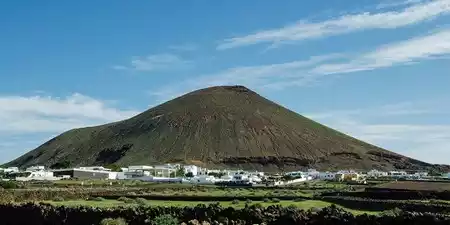
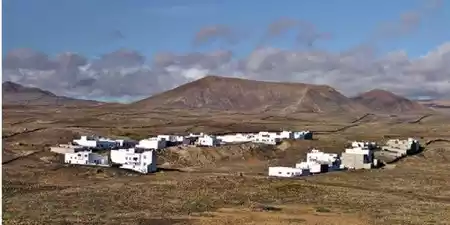
Los Ancones is a town located in the municipality of Teguise, on the island of Lanzarote.


Charco del Palo is a naturist resort located on the northeast coast of Lanzarote
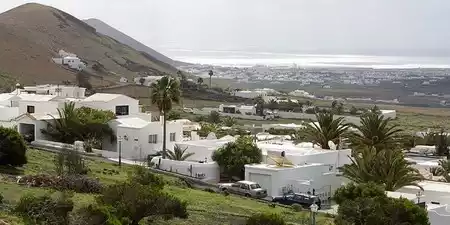
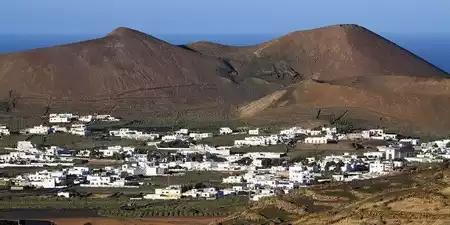
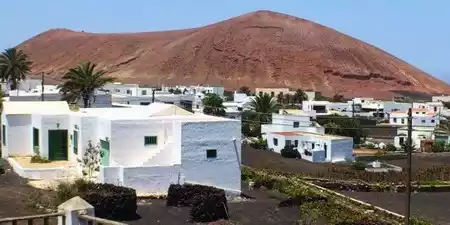

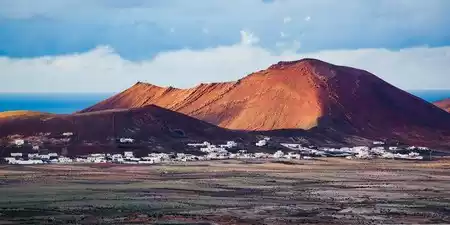

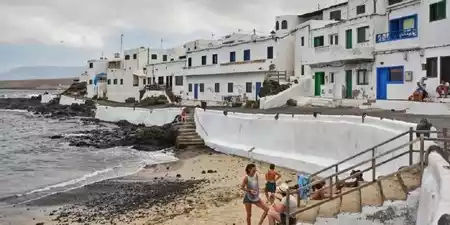
Located on the northwest coast of the island in the inner left corner of a large cove


Located in the north of the island in the highest and most mountainous area of the municipality of Teguise.


La Villa de Teguise is a municipality in the center of Lanzarote with impressive historical architecture, cultural festivals and outdoor activities, as well as a great gastronomic offer.

Las Caletas, a small paradise on the island of Lanzarote, is a place that you cannot miss on your visit to this wonderful island.
The eastern sector of the municipality of Teguise is part of the Parque Natural Marítimo-Terrestre de Famara, a natural park that extends to the islets to the north of Lanzarote. This area is of high natural value, offering breathtaking views of the island's natural beauty. From Las Nieves, visitors can enjoy a wide perspective of the park and the surrounding areas.
To the east, you'll find the protected area of the Teneguime ravine, a region that further highlights the natural wealth of the island.
In Tao, you’ll encounter the volcanic formations resulting from the island's most recent eruption in 1824, including the Clérigo Duarte Mountain, a singular volcanic manifestation. The interaction of magma with water led to the emission of large quantities of brackish water, a unique geological phenomenon worth observing.
Walking through the streets of Teguise offers a glimpse into the rich history of the island. Notable landmarks include:
The Convent of Santo Domingo
The Parish House
The House of the Spínola
The Torres House
The Palace of the Spínolas
The Cilla (a historical building)
The Church of Our Lady of Guadalupe
The Convent of San Francisco
The Palace of the Marquis
The House of the Herrera Family
The Barracks House
The Temple of Vera Cruz
On the outskirts of the town, dominating the landscape, is the Castle of Guanapay, built on the remains of an ancient watchtower, standing as a testament to the island's historic defenses.
In Tahíche, be sure to visit the Fundación César Manrique, which was inaugurated this year in what was once the home of the famous Lanzarote artist, César Manrique. This foundation is a tribute to his legacy and connection to the island.
Lastly, don’t miss the archaeological site of Zonzamas, offering insights into the island's ancient past.
This tour through Teguise combines both natural beauty and historical significance, making it a must-visit for anyone interested in exploring the island’s heritage.

Promoción y turismo en internet