

Lanzarote, the most volcanic island in the Canary Islands, was declared a Biosphere Reserve by UNESCO in 1993, recognizing its exemplary model of sustainable development within the Archipelago.
With over 43% of its territory protected, Lanzarote is a testament to the island’s commitment to conservation, which includes the Chinijo Archipelago, one of the most important natural spaces in the region.
Lanzarote's efforts to protect its environment stem not only from the scientific significance of its volcanic activity but also from its exceptional floral and faunal diversity. The Famara massif, located in the north of Lanzarote, is home to an extraordinary concentration of botanical endemisms, with the highest number per square kilometer found across all of Europe. This unique environment provides a rare opportunity to study the island's diverse ecosystem, where plants and animals have evolved to thrive in its harsh volcanic landscape.
Lanzarote’s blend of volcanic beauty and commitment to sustainable practices makes it a key destination for both nature lovers and environmentalists alike.
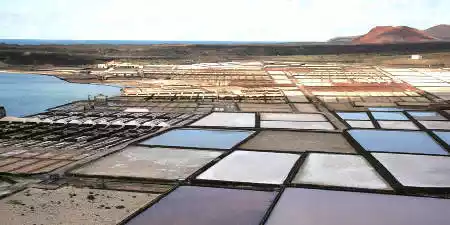
Known for their beauty, they are the last ones left in exploitation in Lanzarote and give a special appeal to this unique landscape.

This space brings together a set of cones that are part of the complex volcanic system that built Timanfaya after a long eruptive history.

The islets located to the north of Lanzarote make up a landscape of great beauty and particular characteristics.

The volcanic tubes with inter lakes iores constitute in themselves unique and representative geomorphological formations.

Volcanic structure, prior to emissions of the historical lava flows from the 18th century, which flow over the previous topography, surrounding it as they are higher up.
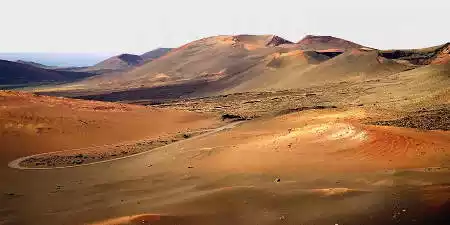
Timanfaya represents the best sample of volcanic habitat hardly colonized by vegetation.
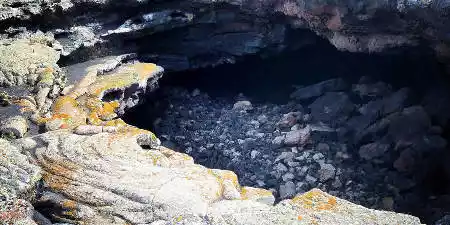
This volcanic tube is a geomorphological feature unique and highly representative of island structures.

Formed by the islets north of Lanzarote, such as the cliffs of Famara and the plains of Jable.
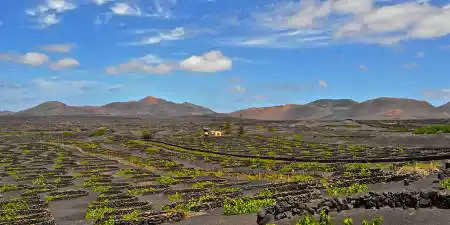
La Geria is a unique landscape , full of character and remarkable beauty where man and nature coexist harmoniously. They have a particular vineyard cultivation system
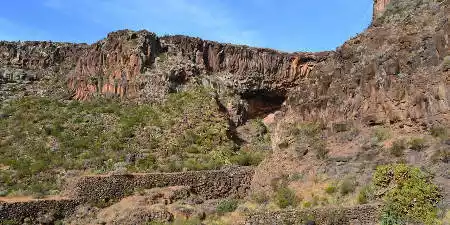
The Teneguime ravine constitutes a representative geomorphological unit of the insular geology with outstanding landscape values .

This space brings together one of the island@#%s best samples of historic lava flow and lapilli field habitat.

The Ajaches constitute a volcanic massif of great aesthetic and landscape relevance, and provided with evident monumentality.
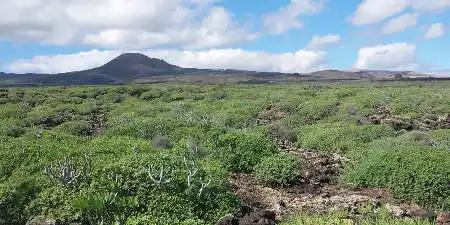
It covers a large part of the northeastern end of the island and is product of the eruptive activity of the volcano of the same name, giving rise to a very attractive landscape

Promoción y turismo en internet