

It is recommended to start this route in Teguise, the old capital of Lanzarote. Taking the road towards Haría, you pass through Los Valles, a small agricultural village where the Casa de los Peraza is located. After passing this, you’ll come across the Wind Farm of the same name. A bit further, you will see a lush valley full of thousands of palm trees: Haría.
Continuing on the north road, past the town of Máguez, you will spot the impressive Corona Volcano. Shortly after, you arrive at Yé, near the Mirador del Río, located atop the Famara Massif. The viewpoint blends into its surroundings and offers a panoramic view of the Chinijo Archipelago, a group of islets situated to the north of Lanzarote.
Heading further north, you’ll reach Órzola, a fishing village where you can catch a regular ferry to the nearby island of La Graciosa. It’s renowned for the quality of its fish. Leaving Órzola and continuing along the road, you will come to Jameos del Agua, another must-see spot. Inside, you’ll find a cool oasis, with natural and artificial pools, and an auditorium housed in a volcanic cave.
Very close to Jameos del Agua is Cueva de los Verdes, a volcanic cave once used by the island’s ancient population as a refuge from pirate attacks. It’s only 2 km away and can be explored on a guided tour lasting about one hour.
The route continues towards Arrieta and Punta Mujeres, two coastal towns where you can stop to enjoy some fresh fish. The final stop is the Cactus Garden. Designed by César Manrique, it houses 1,500 cacti from 1,000 different species, all arranged in a stunning stone enclosure resembling a Roman amphitheater.

Original construction dug into the ground and blended into the environment , offers a panoramic view of a group of islets located to the north of Lanzarote.

Built in the s. XV, preserves the simplicity of the popular architecture of Lanzarote. Currently it serves to expose the characteristics of daily life on the island in the 18th century.
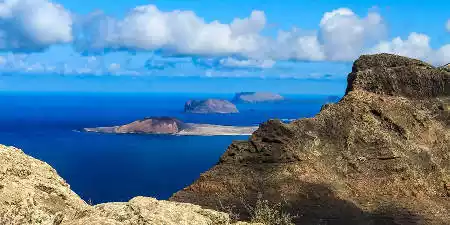
Group of islets formed by La Graciosa, Alegranza and Montaña Clara, together with Roque del Este and Roque del Oeste or from hell.
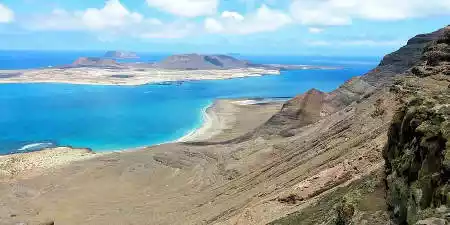
The Riscos de Famara, with their impressive vertical walls, are the main mountain massif of Lanzarote, in the north of the island.

Original space unparalleled in world gardening, it contains 1,500 cacti of more than 1,000 species from all over the world. planet a stone enclosure, as a Roman amphitheater.
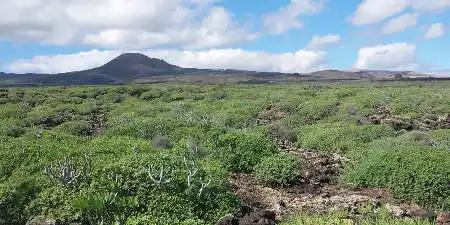
It covers a large part of the northeastern end of the island and is product of the eruptive activity of the volcano of the same name, giving rise to a very attractive landscape

An underground oasis of abundant and varied vegetation, incorporates an auditorium built in a volcanic cave and an interpretation center on the world@#%s volcanoes.

Grotto volcano of several km in length, created by the incandescent lava during its journey. The ancient inhabitants used it as a refuge.

Promoción y turismo en internet